INDUSTRY:
UX/UI DESIGN
COURSE:
INTERACTION DESIGN
YEAR:
2023
EXPERIENCE:
COMPLEX USER JOURNEYS, FIGMA
Cinema Website Design
about.
This project contains a comprehensive analysis of user stories and task decomposition for a cinema website, with a focus on improving the movie-going experience for various user demographics. By breaking down user stories, we gain insights into the needs and motivations of different users, helping us understand how they interact with the website. Through hierarchical task diagrams, we visualize the interactions between actors and systems in the cinema ecosystem, facilitating a deeper understanding of the user journey.
Furthermore, the project addresses the challenge of informing students about discounted movie rates, offering structured recommendations to enhance user engagement, group booking features, affordability, and accessibility. By aligning with user-centric design principles and business objectives, the solutions aim to create a cinema website that meets the diverse needs of its target audience, leading to improved customer satisfaction and engagement.
Overall, this project serves as a valuable resource for cinema management teams and stakeholders looking to enhance the customer experience.
design process.
The primary objective was to create a modern platform tailored to "digital natives" (16-26 year olds) in the Dutch market, focusing on affordability, social engagement, and ease of access.
1. User Research & Needs Analysis
User Stories: We developed detailed user stories for diverse demographics (students, families, elderly) to gain empathy and understand specific motivations, such as the need for discounted rates or safety during travel.
Task Analysis & Hierarchical Diagrams: We decomposed complex user interactions (eg. "Booking a taxi" or "Student discount signup") into step-by-step flows to visualize the actor-system relationship and identify friction points.
2. Ideation & Strategy
"How Might We" (HMW) Statements: We framed core design challenges into actionable questions, focusing specifically on informing students about discounts and improving accessibility for elderly users.
6-3-5 Brainwriting: Utilized this collaborative brainstorming technique to rapidly generate a high volume of potential solutions for our HMW statements.
Affinity Diagrams: We organized brainstormed ideas into thematic clusters (eg. Social Media, Gamification, Transport) to identify strong design directions.
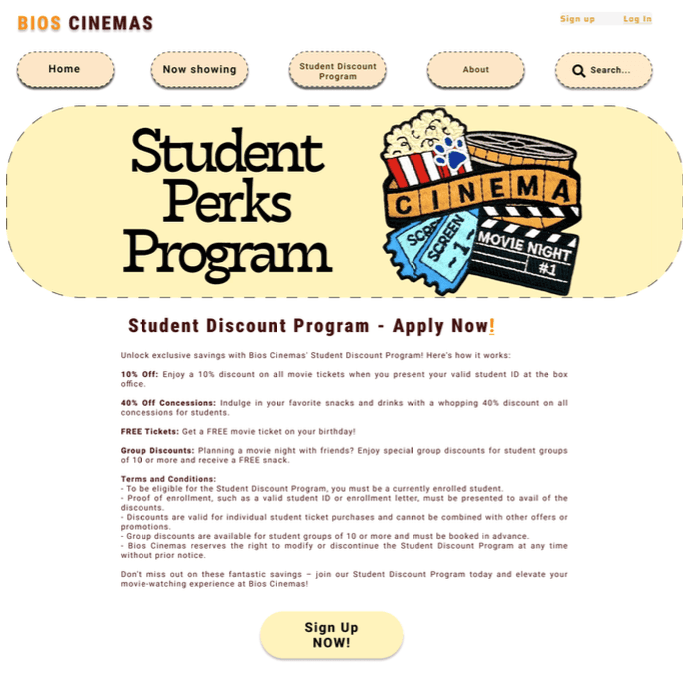
Value Propositions: Defined clear value statements for our target personas to ensure the proposed solutions, such as a "Student Perks Program" aligned with both user needs and business goals.
3. Definition & Requirements
Scenario Building: Created concrete narratives describing users interacting with the solution in real-world contexts to validate the flow of features like group bookings.
MoSCoW Method: Applied this prioritization technique (Must have, Should have, Could have) to categorize requirements, ensuring the "Minimum Viable Product" included essential features like filtering and discount verification.
Use Case Descriptions: Documented precise system responses and user actions for key tasks, such as redeeming a "snack roulette" reward.
4. Information Architecture (IA)
Card Sorting: Conducted sessions with users to organize movie genres and terminology, ensuring the site structure matched the users' mental models.
Taxonomy Development: Established a user-centric classification system for movies (eg. defining age ranges and cinema types like IMAX/3D) based on the card sorting results.
Sitemaps: visualised the website's hierarchy to ensure intuitive navigation between the home page, booking systems, and reward dashboards.
5. Prototyping & Visual Design
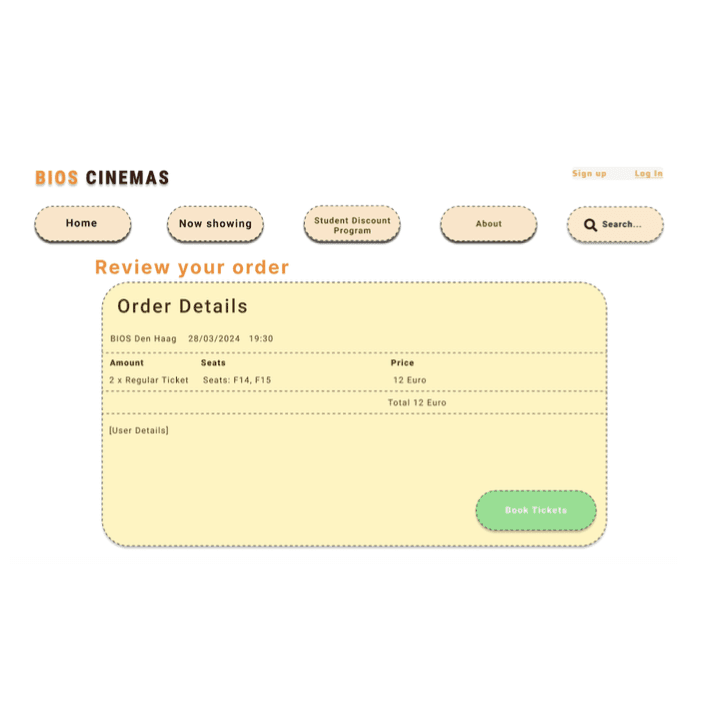
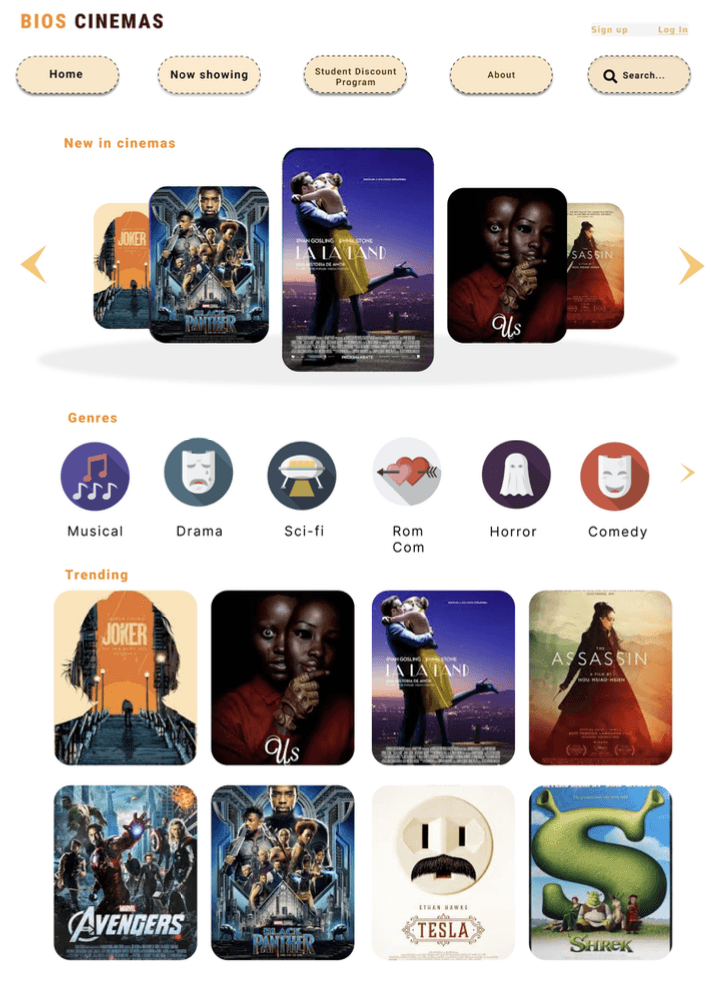
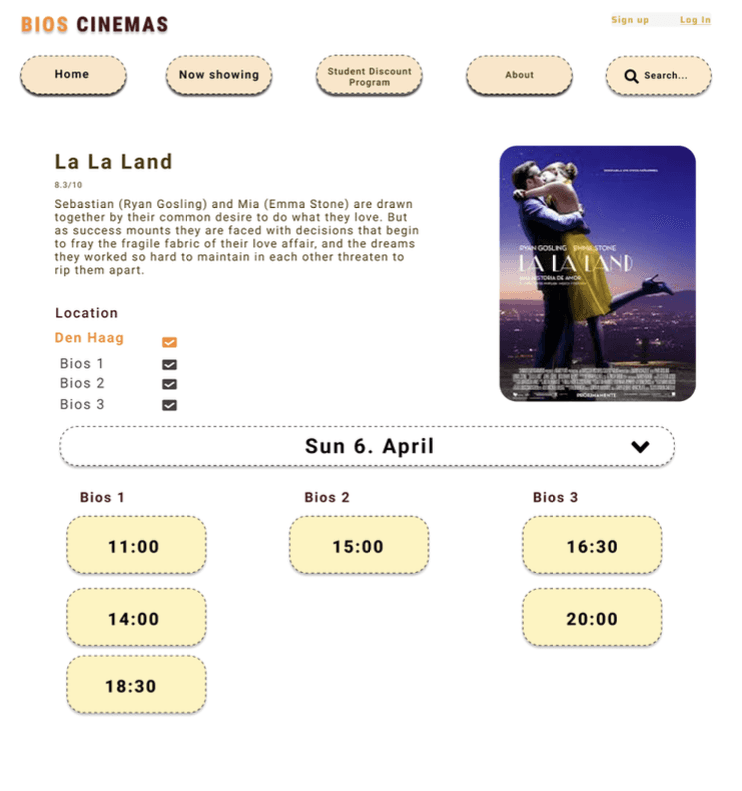
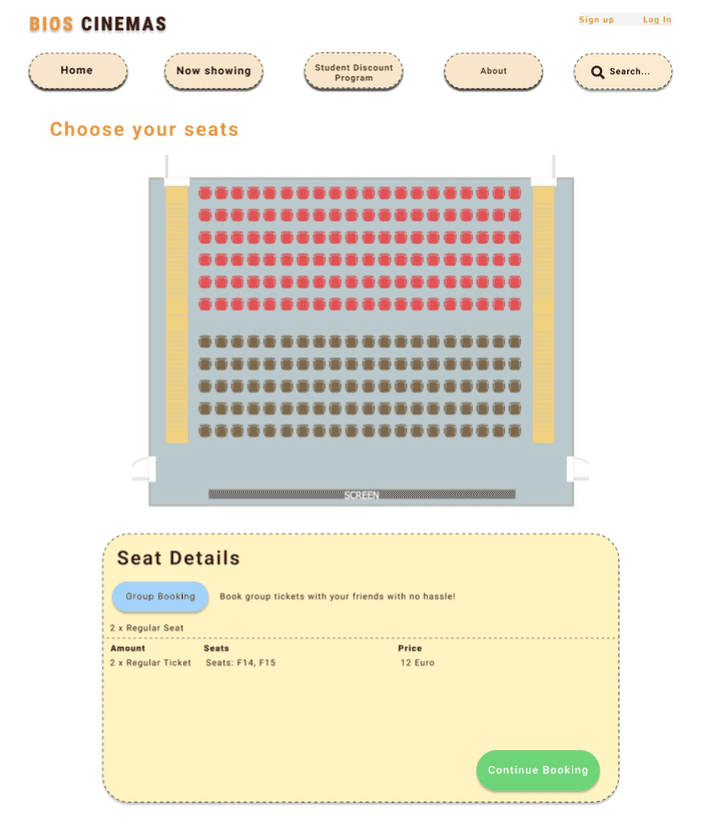
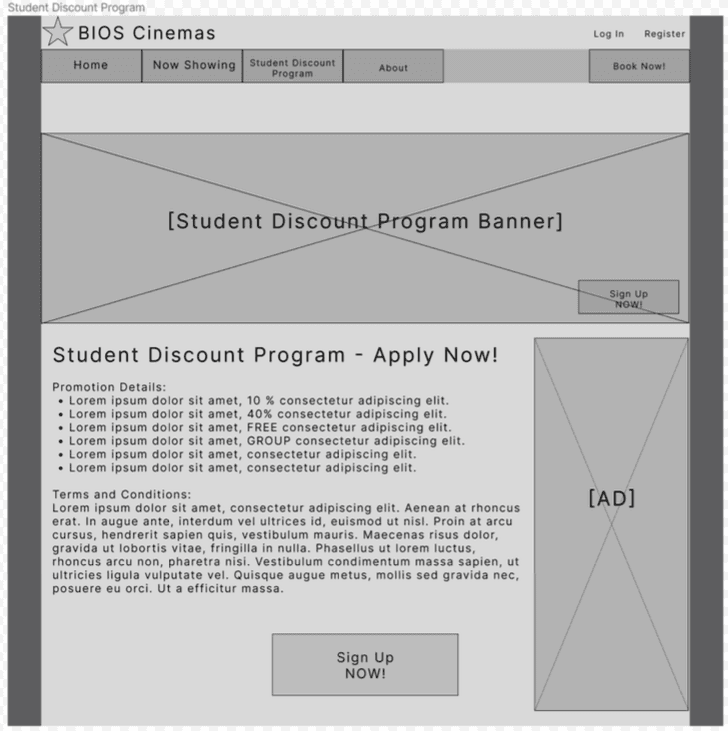
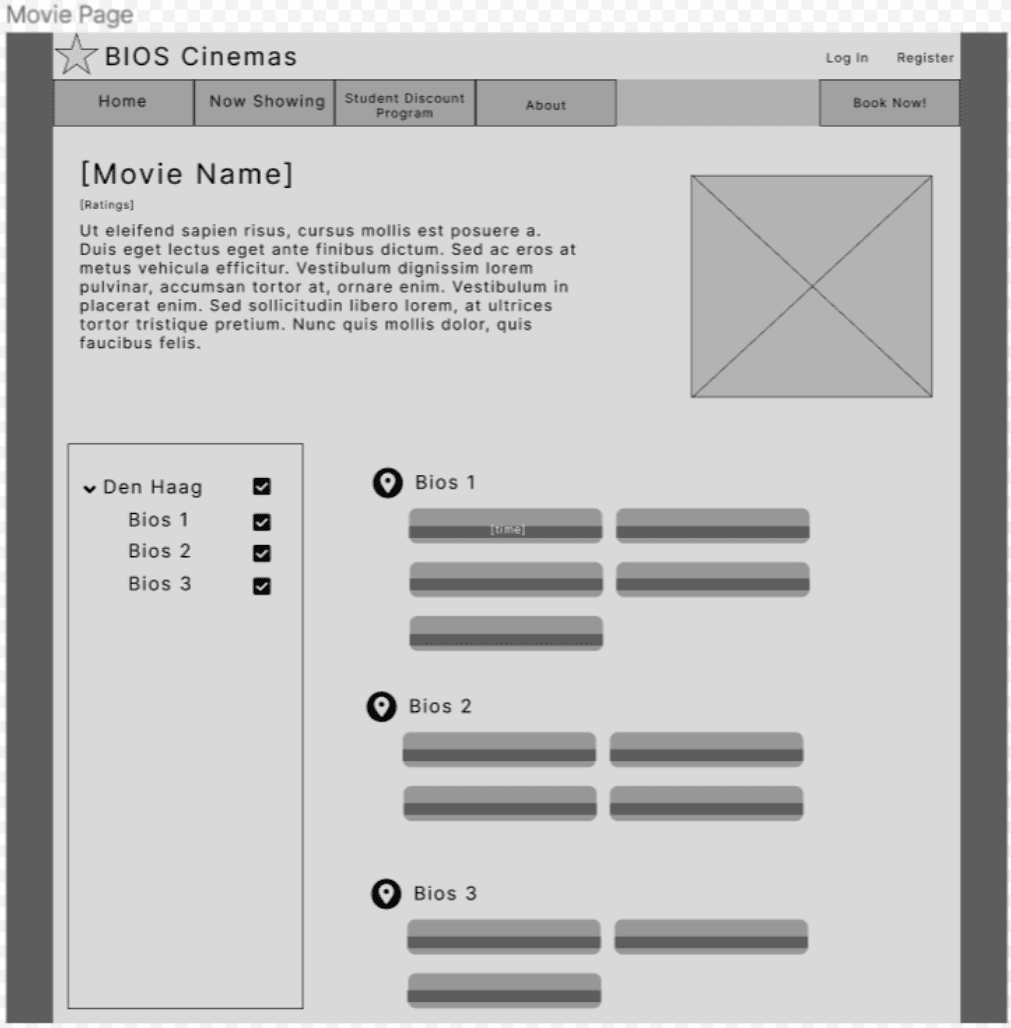
Wireframing (Low to High Fidelity): Progressed from initial sketches to annotated, high-fidelity wireframes. This stage visualized unique features such as the "Group Booking" system with QR codes and the gamified "Spin to Win" rewards interface.
Prototyping: The wireframes were made into a high fidelity prototype using Figma.
result.
The project resulted in a user-centered website design that streamlined the ticket purchasing process and introduced community-building features. Key deliverables included a "Student Perks Program" to drive loyalty and a "Group Booking" feature to enhance the social cinema experience, directly addressing the client's goal of leveraging digital interaction to increase market share.